This is only blog post number three and we’re already all over the place. Hang in there!
I’ve been using an over the counter continuous glucose monitor (CGM) for several months. Historically, these were used by diabetics to monitor their glucose levels so they could take insulin accordingly. Recently, several companies have made the monitors available over the counter.
I know of two companies, Dexcom and Abbott, that make these over the counter CGMs. I’ve only used the Dexcom monitor. The companies make it easy by offering a subscription. You get a shipment of new monitors just as the old one is dying. The downside, if you can really call it that, is that for lazy people like me, it’s hard to switch.
The monitor sticks to the back of your arm. It has a small needle that pierces the skin to get the readings. It does not hurt to put it in and I cannot feel it while I’m wearing it. Removing the sensor is the most painful part. This is because the tape that holds it to your arm is extremely sticky. You have to replace the sensor every 14 days. Dexcom, the company I use, automatically ship new sensors so I’m never without.
The data you get arrives via an app on your phone. It provides continuous readings of your glucose levels every 15 minutes. Your glucose levels rise and fall depending on what you’re eating, what you’re doing, how you’re sleeping and your stress levels. I’m not a health professional. I cannot adequately explain how important glucose and insulin are to your body. Do your own research. Talk to your health care professional if you want more information.

You can really geek out over the data. In the beginning I learned that my glucose levels were high (western medicine would say normal but they were not optimal). The high glucose levels were indicative of insulin resistance making it difficult to lose weight. For me my entire wellness journey really needed to start with bringing down my overall glucose levels.
As I focus on eating the right foods, drinking more water, strength training at least 3 days a week, and prioritizing sleep (it’s a lot- I know!) it’s been motivating to see my average glucose come down. This has been a quicker fix (still a work in progress) than my weight. Even if outsiders can’t see this accomplishment, I’m so proud of how much healthier I am. It is a big difference from before I had the continuous glucose monitor.
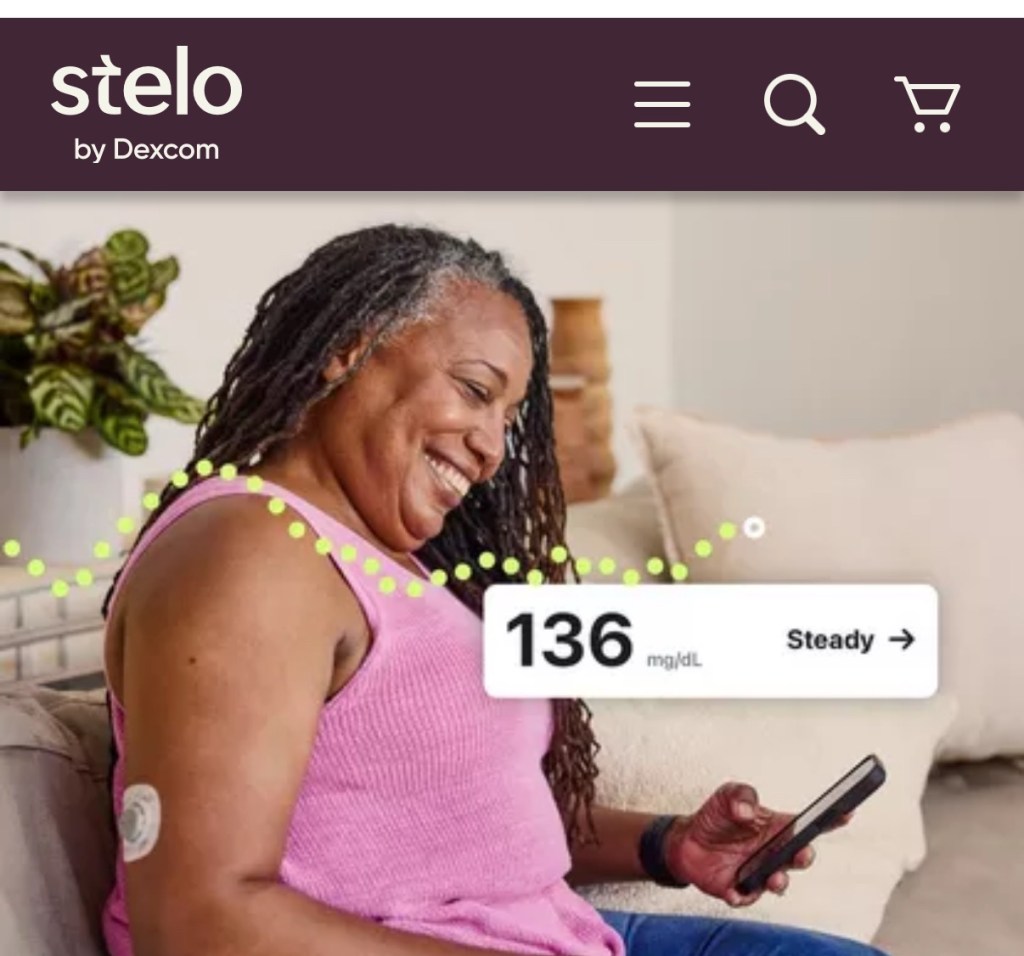
One thing I don’t like about the monitor is you have to keep your phone within 20 feet of you at all times so the app can get the readings from the monitor on your arm. I usually have my phone near me but making that a requirement felt burdensome. The monitors are not pretty. It’s fairly discrete, about one inch round, and sticks to the back of your arm. I don’t feel it or notice it but other people will see it when you wear short sleeves or tank tops. Another downside is the cost which is about $80-$100/month.
Overall, investing in these monitors has been helpful, insightful, and motivating. It’s been instrumental in my wellness journey and the pros outweigh the cons.
 Discovering Dorothy
Leave a comment